_Primary%20logo%20edited.png)
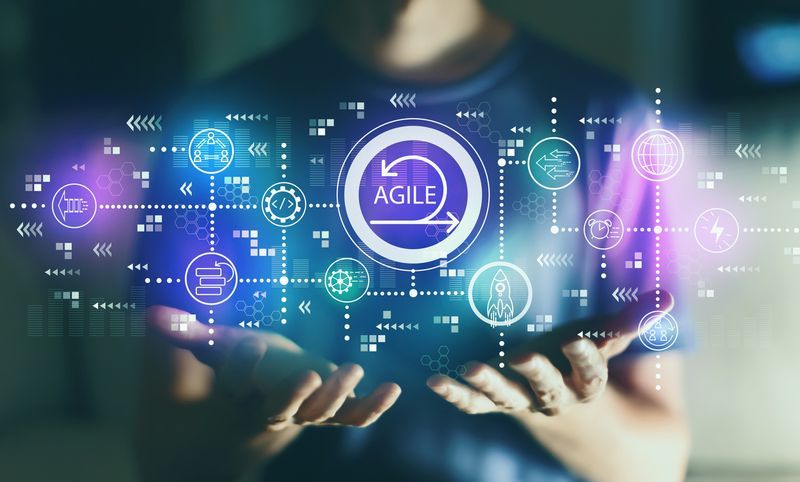
Organisations that embark on agile transformations invest significantly in the mechanics: training in Scrum or SAFe, new tooling, reorganised team structures, renamed job titles. Then, twelve months later, they conduct an honest assessment and find that the ceremonies have changed but the culture hasn't. Decisions still escalate. Leaders still manage outputs rather than outcomes. Teams still work in ways that are agile in name only.
The framework was implemented correctly. The transformation didn't happen.
Agile transformation asks more of leaders than almost any other change program. It requires them to genuinely cede control — to trust teams to make decisions, to measure outcomes rather than activity, to tolerate uncertainty rather than demanding detailed plans. This is not a training problem. It is a sustained behavioural change problem, and it cannot be solved with a two-day leadership workshop.
The organisations that successfully transform to agile are those that treat leader behaviour change as a programme in its own right — with the same rigour, measurement, and sustained attention as any other major transformation. That requires infrastructure. Spreadsheets and status updates are not sufficient.
The pattern in failed agile transformations is consistent: strong launch energy, visible progress in the first quarter, and then a gradual reversion to old patterns as the programme loses momentum and attention moves to the next priority.
Matae's platform is built to sustain change momentum across the full lifecycle of a transformation — not just the launch phase. Leader engagement is tracked continuously. Adoption of new behaviours is measured, not assumed. Risk signals are visible early, when interventions can still change outcomes, rather than at the quarterly review when they are already embedded.
Large organisations running agile transformations across multiple business units face a coordination challenge that compounds with scale. What is happening in the technology division may look very different from what is happening in operations. A portfolio-level view of transformation progress — where adoption is strong, where it is at risk, and where additional support is needed — is essential for transformation leaders who are accountable for the whole program, not just the parts they can directly observe.
Matae's Portfolio Manager provides that view. Transformation Directors can see the full picture without requiring each business unit to report in a different format.
_Secondary%20logo%20-%20Copy%20edited.png)
Find out how prepared your organization is for AI-driven transformation — and where the biggest risks to your investment are hiding. 8 questions, instant results.
Please enter your first name
Please enter your last name
Please enter a valid email
Please enter your role
Please enter your organization
Question of 8
Stay ahead with expert perspectives, emerging trends, and practical strategies designed for leaders shaping change and transformation.
Please enter a valid email
AI Change Readiness Assessment
See how ready your organization is for your AI transformation and get your free Executive Readout.